
Construction
Construction
How long will it take to build the scheme?
We expect construction of the Oxford Flood Alleviation Scheme to take up to 5 years.
Construction won’t be ongoing in all areas of the scheme for this whole duration, and the removal of material from the floodplain will not take place all year round. We will be able to provide more detail on the timings and order of construction once we have finalised the construction programme.
We’re working closely with Oxfordshire County Council to coordinate their replacement of the A423 Kennington Railway Bridge, which is in poor condition. The bridge is crucial to the Oxford Flood Alleviation Scheme as floodwater from the scheme needs to pass underneath the bridge to rejoin the River Thames. For more information on the A423 bridge, please refer to the Oxfordshire County Council website.
Where will your temporary construction compounds be?
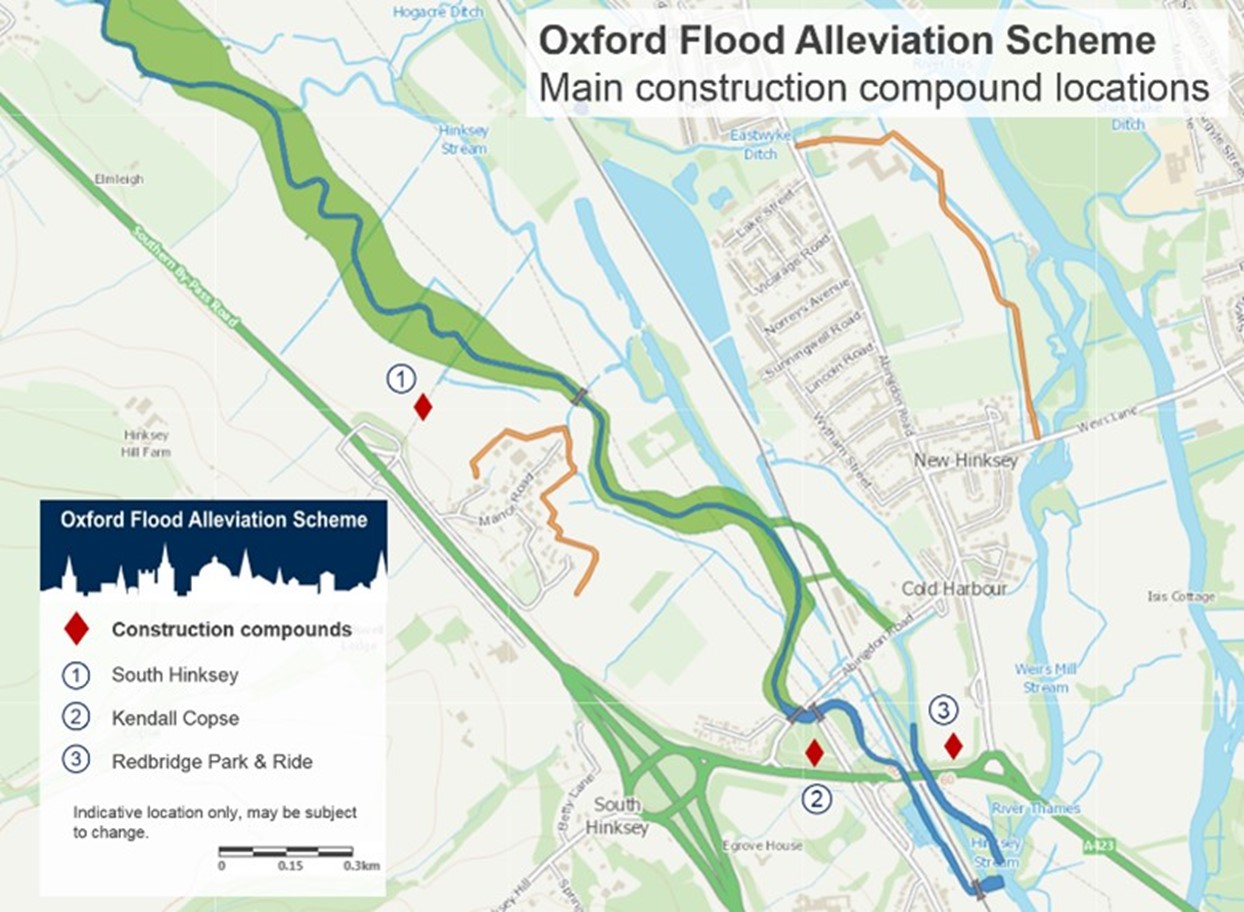
In order to build the scheme we need temporary bases in the area and close to transport links. These construction compounds will be removed following completion of construction. The map below shows the intended locations of our 3 main construction compounds.
How will you build the scheme considerately?
We will ensure we protect the environment and local communities before and during construction and once the scheme is in place. For example, minimising noise and checking air quality and traffic flow impacts.
We will be installing and using temporary access tracks within the scheme area so that our vehicles don't travel too close to communities. We will have restrictions on hours of work. We will have a Community Liaison Officer on site during construction, to address any local concerns that may arise.
We have been in regular contact with communities that will be particularly affected by construction. We have thoroughly investigated options to reduce the impact of construction as much as possible and will continue to work closely with local residents. We value the support of local communities in progressing with this vital scheme.
How will the scheme work with local archaeological heritage?
We have conducted extensive archaeological investigations across the scheme area.
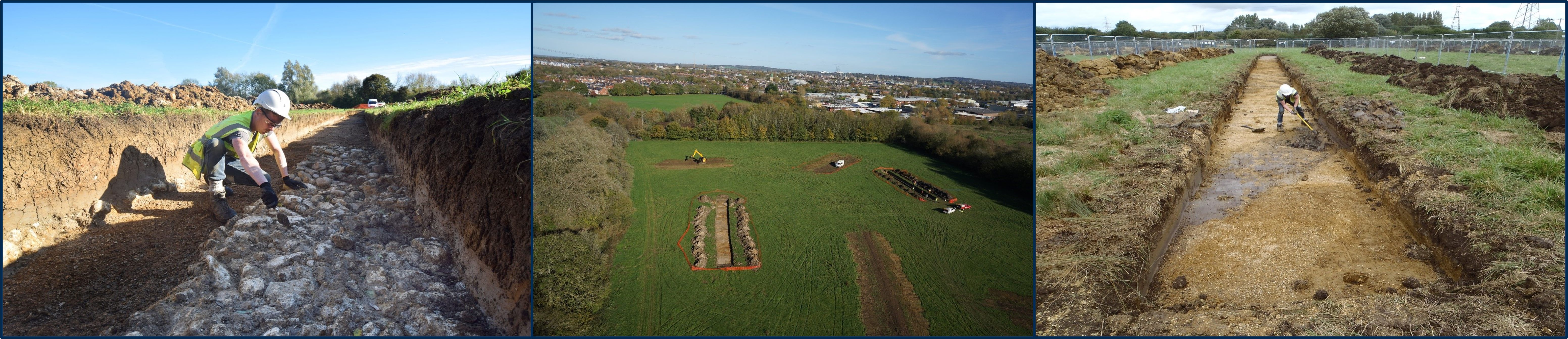 2017 Archaeological Work
The scheme has been designed to avoid Old Abingdon Road culverts which are a Scheduled Monument and to minimise the impacts on the setting of the culverts, including the Old Abingdon Road medieval causeway. We will raise awareness and appreciation of the heritage value of the culverts and causeway by putting up information boards.
During construction we will record buried archaeological remains and measure and map any existing earthworks and landscaping. We will involve the community in this work through a series of heritage outreach events.
What will you do with all the excavated material?
One of the main tasks in building the scheme will be to remove a large amount of material such as earth and gravel from the floodplain to create more space for floodwater. We will re-use much of the excavated material on site, for example in earth embankments and environmental features. We will also retain some topsoil to help vegetation recover after construction. We will still need to transport around 365,000m³ of material out of the area. We cannot leave it in the floodplain, so it will be moved off site to be used for landscape restoration in previously excavated quarries. We are exploring the possibility of transporting some of this material away by rail.
Can you use rail to move the excavated material?
We intend to submit a separate planning application for a temporary access track to the Hinksey Rail Sidings. The track will run from our proposed working area north of South Hinksey village, to the rail sidings. If this planning application is granted, we will be able to remove a significant amount of the waste material off site by rail, subject to commercial agreements with the operator of Hinksey Rail Sidings.
Removing waste material by rail will reduce traffic pressure on the roads, particularly the A34. The material will be taken to sites which already have planning permission for environmental restoration, such as former quarry sites.
As construction cannot start until all approvals are obtained, our main planning application proposes all waste material is transported offsite by road. The temporary access track was not included because at this stage we do not know whether the rail sidings will be available when needed.