
Scheme design
Scheme design
- New bridges for footpaths and bridleways to cross the new stream
- Culverts for water to pass under roads
- Earth embankments and flood walls in some places.
What is the scheme design?
The scheme has a nature-based design that will create a new stream with a gently sloping floodplain alongside it. This will be seeded with grass and wildflowers and incorporate a network of freshwater features including ponds, scrapes and backwaters.
The map below shows the location and main features of the scheme.
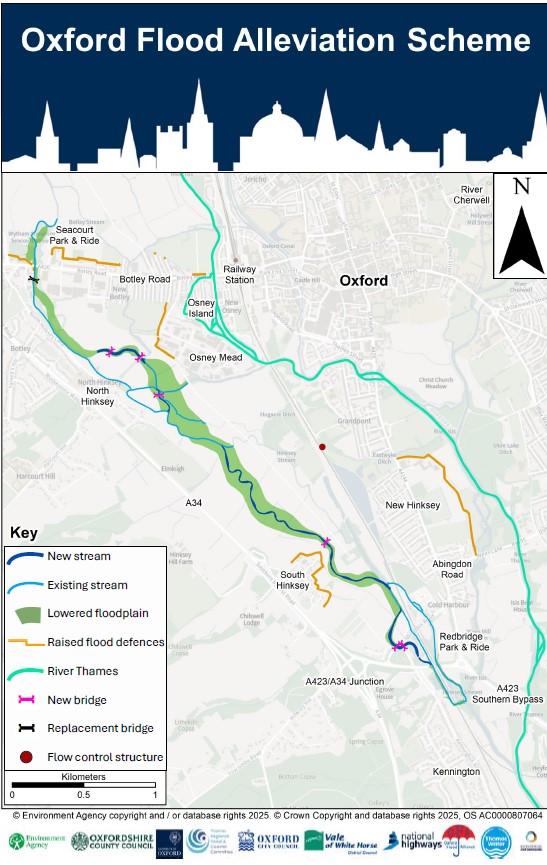
The scheme keeps hard engineering to a minimum, but some structures will be built to complement the new stream, including:
The only new in-stream structure will control the flow in the Eastwyke Ditch, in New Hinksey. It will prevent water from flowing the wrong way at different water levels.
For further details, check out our planning application documents on the Oxfordshire County Council planning portal.
How does the scheme work?
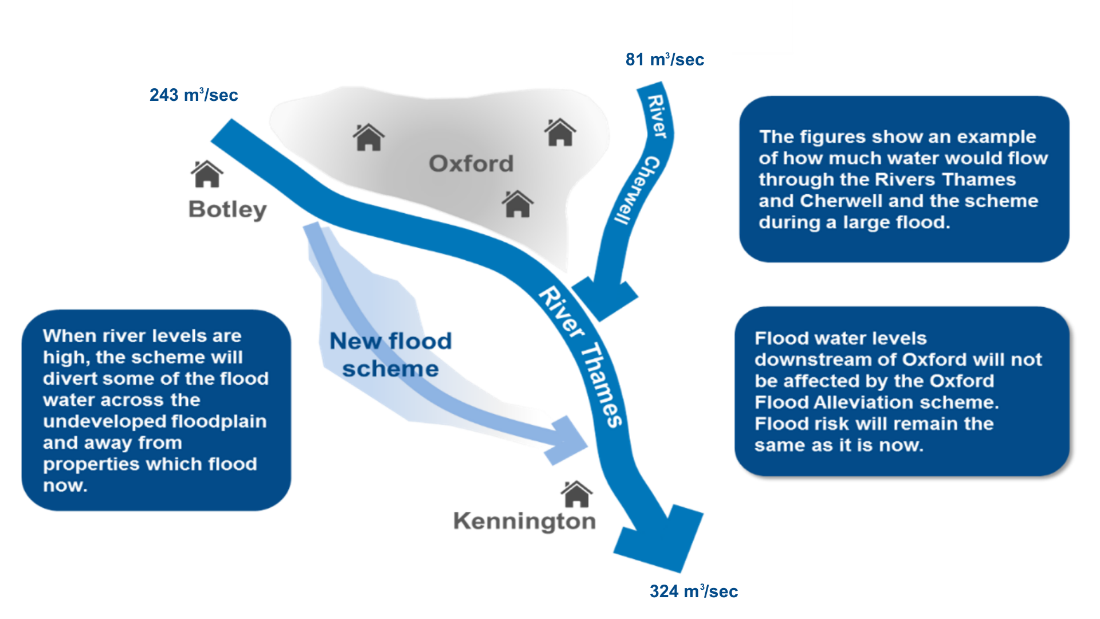
The new stream and lowered floodplain of wetland and grazing meadow will create more space for floodwater away from built-up areas.
The new stream will always carry water. When water levels in the River Thames and other existing streams are high, water will overflow from the new stream and start to fill the lowered floodplain next to it. In larger floods the existing floodplain will also flood as it does now.

The scheme does not need to be turned ‘on’ or ‘off’ when floods occur. Water will simply enter the lowered floodplain as river levels rise. This directs floodwater away from built-up areas that would otherwise flood.
The lowered ground alongside the new stream will provide more space for floodwater and a defined route for this additional floodwater to move through the floodplain. This means that water moving through the floodplain will follow the best possible route, away from communities.
The new stream with lowered floodplain means that flood risk is reduced and not transferred elsewhere. We have ensured the scheme will not increase flood risk to properties downstream. As well as our own detailed modelling, this has been independently confirmed by the Vale of White Horse District Council.
What will it look like?
The new stream will look and behave like a natural stream, with grazing pasture, wetland, pools, and gravel riffles. The stream will vary in width like a natural stream, from around 8 metres wide up to 15 metres wide in some locations. The new stream will connect with the existing stream network, including the Seacourt Stream, Bulstake Stream and Hinksey Stream, and will meander through the floodplain to re-join the River Thames.
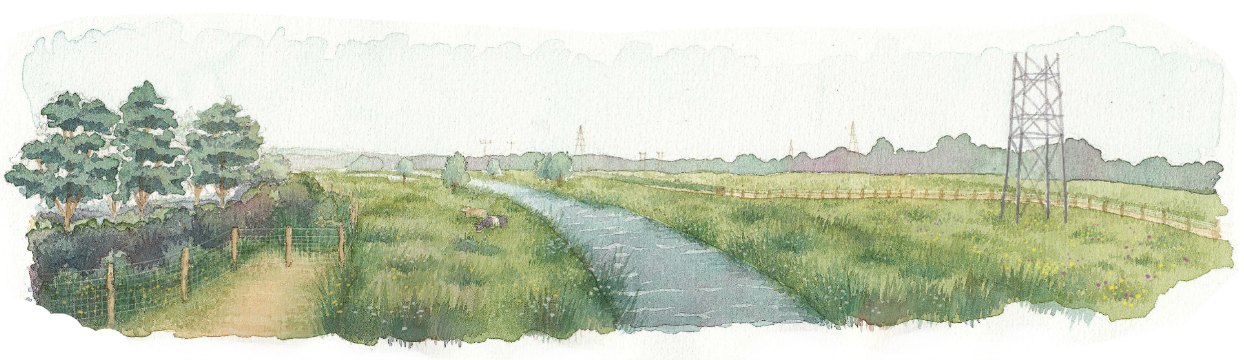 Impression of the new stream, viewed from Devil's Backbone
The ground next to the new stream will be lowered by around one metre from existing ground levels, with a gradual incline at the edges back up to the original ground level. This gently sloping floodplain will be seeded with grass and wildflowers and include a network of freshwater features such as ponds, scrapes and backwaters. The lowered ground next to the new stream will only hold floodwater when river levels are high. This may happen regularly during wetter periods, especially during the winter months.
We will plant new hedgerow, trees, and woodland. We will create floodplain meadows outside the lowered area to join up existing wetland habitats. The character of the vegetation in the area will remain the same, but we will make some small changes to field and hedgerow patterns. We will keep existing vegetation wherever possible to help integrate the scheme into the existing landscape.
Why was this design chosen over alternative options?
We looked at more than 100 combinations of options to reduce flood risk from the River Thames in Oxford. We are aware that some groups and individuals in the community have put forward alternative ideas. We have considered all these proposals. After careful evaluation, none of the alternative proposals were considered to reduce flood risk to the same extent as the proposed scheme, to provide the same certainty and reliability, or the same long-term environmental enhancements.
Why can't you dredge the rivers instead?
Even extensive dredging would not help protect Oxford from the sort of large floods the scheme is designed for. When done in the wrong places, dredging can be extremely costly, environmentally damaging, and increase flood risk downstream. After dredging, rivers keep depositing silt and return to their natural dimensions, meaning it needs frequently repeating. Repeated dredging is inefficient and causes further environmental damage without allowing the river to recover.
The Environment Agency does consider dredging to be an important part of our general maintenance programme, but we consider each location carefully and do it where we know it will make a difference and won’t increase flood risk downstream. In Oxford it would not be a sustainable or long-term solution to reduce flood risk, like our scheme is designed to be.
Are you considering upstream storage?
Creating a new upstream storage area would not be a viable way to reduce flood risk in Oxford on its own. Because floodwater can stay in Oxford for days or weeks, an effective upstream storage area on its own would need to store approximately 50 million m3 of water. This is equivalent to an area the size of Oxford one metre deep in water. There would not be enough space in the existing floodplain to store this amount of water.