
Angus Fire - Bentham - Lancashire
Angus Fire - Bentham
Making Monnex fire extinguisher powder for liquid and electrical fires, without using PFAS.
Operation an oil‑fired boiler.
Storing raw materials, finished products, and waste.
Treating stormwater collected on site and safely discharging it to the River Wenning.
What is this site?
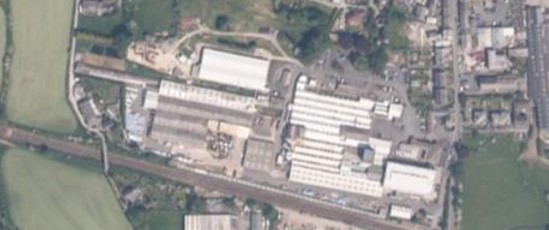
Historically, Angus Fire designed, manufactured, and tested various fire protection products, including Aqueous Film Forming Foams (AFFF), at its site in High Bentham, North Yorkshire.
Some AFFF products required the use of Perfluoroalkyl and Polyfluoroalkyl Substances (PFAS). Angus Fire stopped testing foams containing PFAS at Bentham in 2022 and has since stopped manufacturing all foam products at the site. Testing of non‑PFAS foams continues, but this activity is not regulated by the Environment Agency.
Due to the historic use of PFAS, the site is a source of PFAS in the environment. Evidence shows PFAS is present in the groundwater beneath and across the site.
Angus Fire applied for a permit variation in 2025. Following consultation and assessment, Permit XP3832NV V004 was issued on 08/05/2026. More detail on this, including the Permit Variation Decision Document, is provided in the ‘What activities are covered by the environmental permit?’ section below.
There has been significant national media interest in the Angus Fire site and its historical use of PFAS. We recognise that this has caused concern for residents in Bentham and the surrounding areas.
What activities are covered by the environmental permit?
Environmental Permits
Environmental permits set out the legal rules a company must follow, including what activities it can carry out, how it must operate, and limits on emissions to air, water, and land to protect local people and the environment.
Angus Fire holds an environmental permit issued by the Environment Agency XP3832NV V004.
What activities are permitted?
The permit for Angus Fire covers the following activities:
Permit Variation
After consultation with other organisations and the public, we issued a permit variation for this site.
The variation allows for an effluent treatment plant to reduce PFAS in rainwater collected on site, including future rainfall. Rainwater can pick up PFAS as it passes over the site, leading to contaminated water. The treatment plant will reduce the overall risk of PFAS entering the environment. After treatment, the water will be discharged to the River Wenning.
The levels of PFAS remaining in treated water will be in line with current best practice for PFAS treatment.
Through the permitting process, we have determined that the effluent treatment plant represents Best Available Techniques (BAT) for treating PFAS in stormwater.
You can read the Drinking Water Inspectorate’s guidance on PFAS and ‘forever chemicals’.
We have also issued a decision document explaining the reasons for granting the variation: Decision document: Angus Fire
Latest information
Angus Fire desk study
The Environment Agency is enhancing its understanding of PFAS emissions through a nationwide PFAS Risk Screening Project. PFAS have been widely used across multiple industries, including textiles, electronics, and manufacturing.
Using this approach, we have identified potential PFAS source sites such as landfills, fire stations, airports, and industrial facilities. One of the most significant sources of PFAS contamination has been the use of PFAS-containing Aqueous Film-Forming Foams (AFFF). Some AFFF have historically contained PFAS compounds, which were highly effective at extinguishing fuel fires, however they are now known to be persistent and toxic.
These foams were widely used during fire training exercises, emergency responses, and in fire suppression systems, often applied directly to the ground or washed into drains, leading to environmental contamination.
Phase 4 of the Environment Agency’s PFAS Risk Screening Project comprises a detailed assessment of several previously identified potential source sites including Angus Fire Limited. This is a chemicals facility manufacturing fire suppressant products, including AFFF. Foams have historically been tested on this site within a designated fire testing pad. PFAS-containing foams are no longer produced or tested on the site.
The desk study attached to this email was commissioned as a preliminary assessment of potential source-pathway-receptor linkages at the site.
Updated Q & A document
As and when new questions come in from the community we update the document. You can view by clicking the link below: