
Jameson Road Landfill Site - Fleetwood
Jameson Road Landfill Site - Fleetwood, Lancashire
- landfill gas (which should be collected and controlled through infrastructure)
- leachate (liquid that drains from waste)
- waste disposal activities
- frequent site inspections and odour assessments within the community
- the use of specialist monitoring equipment and drone surveys
- requiring improvements to landfill gas management and site operations
- taking formal enforcement action where necessary
- increasing landfill gas collection and extraction
- improving how waste is covered
- changing tipping practices
- Wyre Borough Council – which investigates statutory nuisance and collects odour reports
- Lancashire County Council – responsible for planning and public health
- UKHSA – provides independent health advice
What is this site?
Jameson Road is an established landfill site near Fleetwood that has been in operation for many years.
The site was taken over in late 2023 by Transwaste Recycling & Aggregates Limited, who now operate the site under environmental permits issued by the Environment Agency.
Landfill sites produce gas as waste breaks down. This is known as landfill gas and includes methane, carbon dioxide and small amounts of hydrogen sulphide. Hydrogen sulphide has a strong “rotten egg” smell and can be detected at very low levels.
When landfill sites are reworked after a period of lower activity, or when older waste is disturbed, gases that were previously contained can be released. This can increase odour if it is not effectively controlled.
The site also manages:
Since early 2024, there has been a significant increase in reports of odour affecting Fleetwood and surrounding areas.
What has happened since 2024
In response, the Environment Agency has significantly increased its regulatory activity at the site.
This has included:
We have required the operator to make changes such as:
While these actions have led to improvements in how the site operates:
Odour is still occurring and continues to affect the community. This is not acceptable and further improvements are required.
Permanent capping of Cells 5 and 6 is a key long-term step to reduce emissions, which is designed to better contain landfill gas and prevent it from escaping.
Monitoring and health advice
We have deployed a mobile monitoring facility in the local area to measure air quality, including hydrogen sulphide and methane.
Air quality monitoring supports our understanding of emissions and site performance, but it is not used on its own to determine breaches of the environmental permit.
We work closely with the UK Health Security Agency (UKHSA), who are the independent public health experts. They use monitoring data and other information to assess potential impacts on human health.
UKHSA has advised that the levels measured are generally below those expected to cause long‑term physical harm, but strong odours can still be unpleasant and may affect wellbeing.
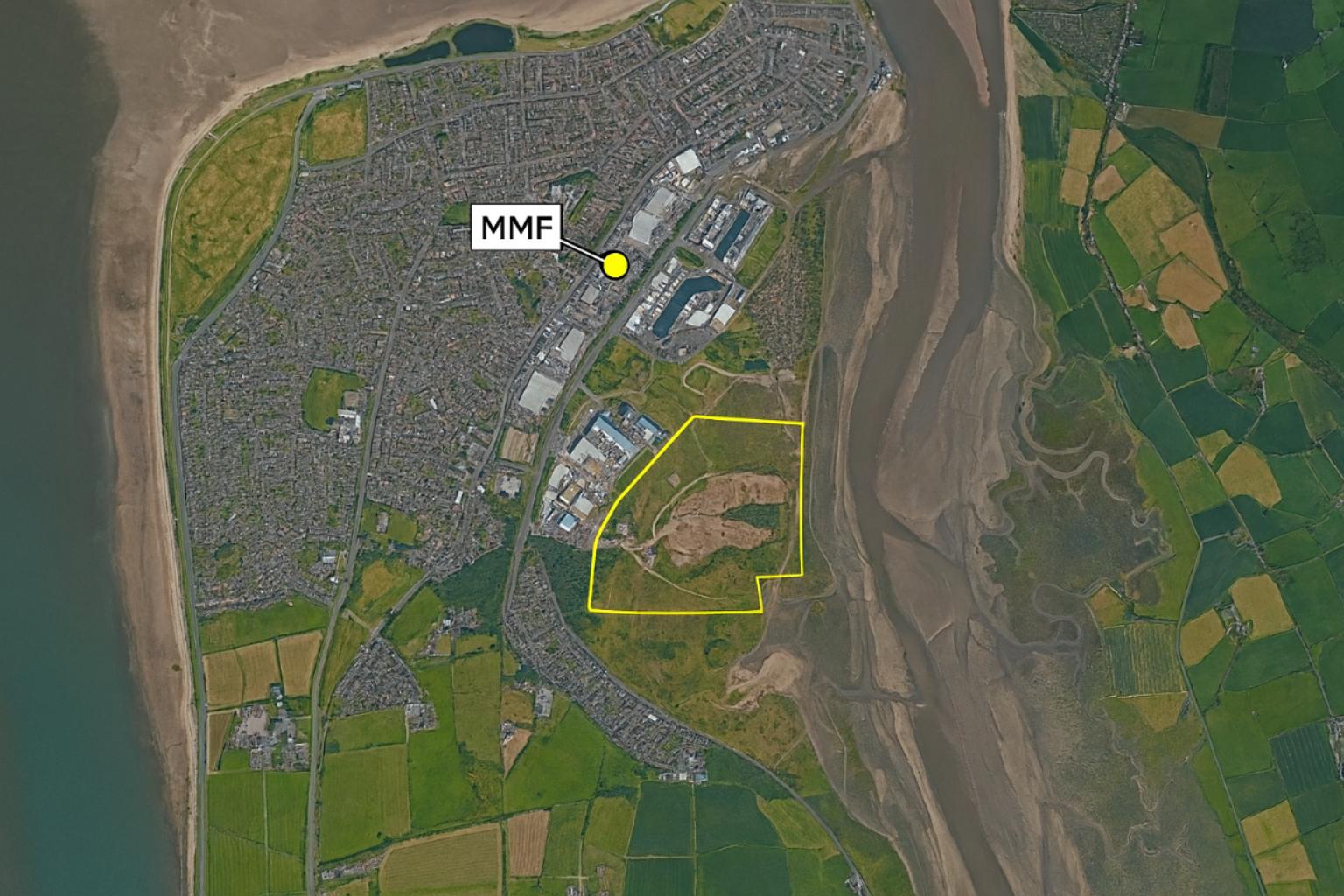
The map below shows the location of Jameson Road landfill site and the location of the mobile monitoring facility.
Air Quality Monitoring Review
Following feedback from residents and discussions at the Community Liaison Group, the Environment Agency carried out a review of the current air quality monitoring arrangements with partner organisations including UKHSA, Lancashire County Council, Wyre Borough Council and NHS representatives.
The review considered the location of the Mobile Monitoring Facility, alternative monitoring options and how monitoring information is used alongside other evidence when regulating the site.
Read the Air Quality Monitoring Review briefing here: Jameson Road Air Quality Monitoring Review
Partnership working
We work closely with:
We recognise the continued impact this is having on residents and the importance of reducing odour affecting the community.
What activities are covered by the environmental permit?
- Permit AP3095LF (Phase 1)
This applies to the older part of the site. It is now closed and in aftercare, meaning it is no longer used for active waste disposal. - Permit BL9518IE (Phase 2)
This is the active landfill area, where waste disposal, landfill gas management and site operations currently take place. - Control landfill gas
- Minimise odour from waste activities
- Manage leachate
- Prevent pollution outside the site boundary
- Maintain site infrastructure
- Monitor and report
- minimises odour and prevents pollution from affecting local residents
- controls emissions from landfill gas
- protects air, land and water
Jameson Road environmental permit
In simple terms, the environmental permit controls what the landfill site can do and how it must operate to protect the environment and the local community.
Following a recent change to the permit, the types of waste that can be accepted have been restricted and the operator must introduce additional air quality monitoring.
We regulate the site to ensure these conditions are met and will take enforcement action if they are not.
The Jameson Road landfill site is regulated by the Environment Agency.
You can view the latest permit here: Jameson Road Permit
Why are there two permits?
The site is made up of two separate landfill areas, each covered by its own permit:
Who holds the permits?
Both permits were transferred to:
Transwaste Recycling & Aggregates Limited on 30 August 2023.
They are responsible for operating the site in line with all permit conditions.
What does the closed permit mean in practice?
The restriction to “soils and stones only” applies only to Phase 1, because it is closed and in aftercare.
This does not apply to the active landfill area (Phase 2).
The active permit allows the operator to accept specified types of non‑hazardous waste, in line with strict conditions.
Following a recent permit variation, the types of waste that can be accepted have been restricted to reduce the risk of odour affecting the community.
What the permit requires
The environmental permit sets strict conditions to protect the environment and the local community.
The operator must:
Gas produced by the waste must be collected and managed to prevent odour and emissions escaping from the site.
Waste must be handled and covered in a way that reduces odour, including the use of appropriate daily cover.
Liquid from the waste must be collected and treated to prevent pollution of groundwater and surface water.
The operator must take all appropriate measures to ensure emissions, including odour, do not cause pollution that affects local communities.
This includes landfill liners, capping, and gas collection systems to ensure the site operates safely and effectively.
The operator must monitor environmental conditions and provide this data to the Environment Agency.
Following a recent permit variation, this includes requirements for additional air quality monitoring at the site boundary, which must be approved and implemented.
What this means for the community
The operator is required to run the site in a way that:
If these conditions are not met:
The Environment Agency will take enforcement action to require improvements and, where necessary, restrict activities. If the operator does not demonstrate that odour can be controlled, we will consider all available regulatory options, including further restrictions, and as a last resort, closure.
Enforcement
- Waste handling in this area had the potential to cause significant off‑site odour.
- Cells 1, 2 and 5 were not sufficiently covered
- Gas was not being effectively collected
- This resulted in strong and persistent odour affecting the local community
- Landfill gas was not being adequately collected
- Uncapped areas were producing emissions causing persistent odour
- The operator failed to apply adequate daily cover to waste in Cells 5 and 6
- Odour was continuing to affect the community outside the site boundary
- The Environment Agency has taken repeated action where problems have been identified
- Issues have included landfill gas control, waste covering, and site operations
- Odour pollution has been identified as affecting the local community
- restricting the types of waste accepted on site to reduce odour risk
- installing engineered temporary capping on identified areas of the landfill
- progressing permanent capping of landfill cells
- improving landfill gas collection and management
Jameson Road enforcement
The Environment Agency takes enforcement action when the operator does not meet the conditions of their environmental permit or where there is a risk of pollution.
Below is a summary of the key enforcement actions taken at Jameson Road landfill.
Enforcement timeline
18 March 2024
Suspension Notice (Regulation 37) issued requiring the operator to stop using a “tipping bay” that was not permitted and was causing odour emissions.
24 May 2024
Suspension Notice (Regulation 37) issued due to inadequate control of landfill gas.
19 August 2024
Suspension Notice withdrawn following actions taken by the operator to address the issues identified.
25 March 2025
Suspension Notice (Regulation 37) issued relating to Cell 6.
8 April 2025
Suspension Notice withdrawn after works were completed to improve landfill gas control.
26 August 2025
Enforcement Notice (Regulation 36) issued requiring the operator to submit improved odour and landfill gas management plans.
30 January 2026
Enforcement Notice (Regulation 36) issued due to ongoing odour pollution.
7 May 2026
Enforcement Notice (Regulation 36) withdrawn following actions taken by the operator to address the issues completed.
7 May 2026
Enforcement Notice (Regulation 36) issued requiring temporary capping of Cell 6.
Following site inspections and monitoring, the Environment Agency identified significant emissions of landfill gas from the southern flank of Cell 6.
The notice requires the operator to submit a Construction Quality Assurance (CQA) plan and install engineered temporary capping to control emissions and reduce odour.
5 June 2026
Enforcement Notice (Regulation 36) withdrawn and replaced.
The Environment Agency withdrew the Enforcement Notice served on 7 May 2026 and issued a replacement notice with revised timescales for completion of the required works.
5 June 2026
Enforcement Notice (Regulation 36) issued requiring completion of engineered temporary capping.
The notice required completion of the engineered temporary capping across the southern flank of Cell 6 by 6 July 2026.
7 July 2026
Enforcement Notice (Regulation 36) withdrawn and replaced.
The Environment Agency withdrew the Enforcement Notice served on 5 June 2026 and issued a replacement notice with revised timescales.
7 July 2026
Enforcement Notice (Regulation 36) issued.
The replacement notice continued to require installation of engineered temporary capping across the southern flank of Cell 6, with a revised compliance deadline of 20 July 2026.
What this means
This enforcement history shows that:
We continue to actively regulate the site and require further improvements. Where new issues are identified through inspections and monitoring, we will take further enforcement action, as demonstrated by the notice issued in May 2026.
Current focus
The most important current actions are:
Following site inspections and monitoring, we identified significant emissions of landfill gas from part of Cell 6. We have issued a Regulation 36 Enforcement Notice requiring the operator to install engineered temporary capping in this area to control emissions.
Permanent capping remains a key long-term solution and Environment Agency landfill engineering specialists continue to inspect the works being undertaken. Temporary and permanent capping works remain under ongoing regulatory oversight.
In the meantime, we have required temporary capping and other measures to reduce odour.
What happens next
We recognise that odour is still affecting the community, and this is not acceptable.
If the operator does not demonstrate that odour can be effectively controlled, we will continue to escalate our regulatory response and consider all available options, including further restrictions, and as a last resort, closure.
Compliance Assessment Reports
How do I access compliance assessment reports?
To access compliance assessment reports for Jameson Road from 18th of August 2025 please click here
Reports prior to this date can be found here
Please note that names of officers have been removed from these documents as disclosure would breach the Data Protection Act 1998 (DPA).
Please note when the Environment Agency issues a Compliance Assessment Report (CAR) form, there is a 42-day holding period before the form is published online. This holding period allows operators time to challenge the contents of the CAR form through the EA’s regulatory appeals process. Further information can be found here.
Latest updates from Jameson Road
Incident Reports running total - January 2024 to date
Month | 2024 | 2025 | 2026 |
January | 5 | 272 | 663 |
February | 75 | 1129 | 845 |
March | 1364 | 3221 | 4054 |
April | 1157 | 1125 | 2697 |
May | 568 | 484 | 1449 |
June | 177 | 797 | 658 |
July | 259 | 1063 | 385 |
August | 162 | 597 | 654 |
September | 83 | 405 | 57 |
October | 64 | 124 | 8 (month to date) |
November | 59 | 264 | |
December | 21 | 1184 | |
TOTAL | 3994 | 10665 | 11470 |
Latest updates from Jameson Road
You can find all our community updates on the below links.
Most recent:
Jameson Road Community Update October 1 2026
Previous updates from 2026:
Jameson Road Community Update 23 September 2026
Jameson Road Community Update 2 September 2026
Jameson Road Community Update 7 August 2026
Jameson Road Community Update 24 July 2026
Jameson Road Community Update 9 July 2026
Jameson Road Community Update - 26 June 2026
Jameson Road Community Update - 22 May 2026
Jameson Road Community Update - 11 May 2026
Jameson Road Community Update - 6 May 2026
Jameson Road Community Update - 13 April 2026
Jameson Road Community Update - 1 April 2026
Jameson Road Community Update 27 February 2026
Update 12 February 2026
We are reviewing Transwaste’s compliance with the Regulatory Enforcement Notice issued on 30 January 2026. The notice required specific actions to be completed by 4pm on 9 February 2026. Once this review is complete, we will determine the next steps towards a permanent cap of the most recently filled cells. We will update this page as soon as we have more information.
Update 2 February 2026
On Friday 30 January, we served a regulatory enforcement notice on Transwaste. This notice requires the operator to ensure that areas of the landfill (Cell 5 and Cell 6) are adequately covered to reduce the risk of odour. The deadline for completing this work is 9 February, and we expect the operator to comply in full.
Our officers were present in the local area over the weekend and detected strong odour coming from the landfill. Some odour was also identified from other potential sources closer to Thornton, which we will follow up.
We will be carrying out further checks this week and will keep the community informed of progress. If the required improvements are not delivered by the deadline, we will consider taking further regulatory action. We recognise the impact odour can have on local residents, and the community should not have to experience prolonged odour issues.
Link to the enforcement notice here
Update 30 January 2026
January has seen sustained period of odour reports received through our incident hotline. The last 10 days of reporting numbers are below.
19/01/2026 | 66 |
20/01/2026 | 26 |
21/01/2026 | 21 |
22/01/2026 | 17 |
23/01/2026 | 19 |
24/01/2026 | 9 |
25/01/2026 | 8 |
26/01/2026 | 13 |
27/01/2026 | 8 |
28/01/2026 | 33 |
In previous weeks we have received the following weekly totals (Monday to Sunday); Week ending Jan 4 – 223 Reports; 11 Jan - 138 Reports; 18 Jan – 189 Reports, 25 Jan – 166 Reports.
We are receiving an increased number of letters from members of the community who explain how the issue is impacting them. The nature of the operation is potentially odourous, but it should not be a constant impact on lives of residents. We do not manage the landfill, we expect Transwaste to do that in a way that does not or absolutely minimises impact on the community. We will take action to do this, if the operator does not act swiftly we will escalate our response.
Our officers continue to carry out targeted odour monitoring within the community alongside regular on‑site compliance inspections. We are maintaining an enhanced regulatory presence at the site, including frequent visits and assessments by a landfill gas technical specialist.
This week we have carried out a drone flight on the 28 January followed by a site inspection on the 29 January. Issues were found and we will make sure they are addressed. The focus is on the controls needed to prevent odour.
We have provided immediate feedback to Transwaste and are considering our response and will hold them to account.
Health advice (UKHSA)
- Latest Public Health Risk Assessment (UKHSA): Public Health Risk Assessment
Health advice from the UK Health Security Agency (UKHSA)
The UK Health Security Agency (UKHSA) provides independent advice on the potential health impacts of air quality around the site.
The Environment Agency shares monitoring data and evidence with UKHSA, who use this alongside other information to assess potential impacts on public health.
UKHSA’s assessment is independent of the Environment Agency’s regulatory role.
Frequently Asked Questions
- headaches
- nausea
- irritation to the eyes, nose and throat
- disturbed sleep
- close windows and doors temporarily
- ventilate your home once the odour reduces
- avoid outdoor exposure during strong odour episodes
- understand what is in the air
- identify likely sources of emissions
- assess whether improvements at the site are working
- monitoring is carried out at a fixed location
- wind direction determines where odour travels
- short‑term spikes may not always be captured in data
- the human nose can detect certain gases at very low levels
- continuously monitors gases such as hydrogen sulphide and methane
- records wind speed and direction
- helps us understand how emissions behave over time
- Latest air quality monitoring report: Lastest report
- Current monitoring data: Latest data
- Air quality monitoring factsheet (Mobile Monitoring Facility): Factsheet
- waste odour from fresh waste as it is delivered and tipped
- landfill gas produced as waste breaks down
- requiring improvements to gas management
- issuing enforcement notices, including requiring engineered temporary capping in areas where emissions have been identified
- restricting certain activities on site
- increasing inspections and monitoring
- restricting waste types through a permit variation
- requiring additional landfill gas infrastructure and monitoring
- identify when odour is occurring
- understand which areas are affected
- target inspections
- gather evidence for enforcement action
Health and symptoms
What does the latest UKHSA risk assessment say?
The latest UK Health Security Agency (UKHSA) assessment confirms that gas levels measured around the site are below those expected to cause harm to health.
UKHSA also recognises that strong odours can still be unpleasant and may cause short-term symptoms, which reflects what the community has been experiencing.
While monitoring shows pollutant levels are within health-based limits, odour pollution remains unacceptable and must be addressed.
Has Lancashire County Council published a Health and Community Impact Report?
Yes.
Lancashire County Council's Director of Public Health has published a Health and Community Impact Report relating to Jameson Road Landfill Site.
The report brings together evidence from Lancashire County Council, the UK Health Security Agency (UKHSA) and NHS Lancashire and South Cumbria and considers the wider impacts of ongoing odour exposure on local communities.
The report concludes that while measured pollutant concentrations remain below levels associated with serious or irreversible toxicological harm, persistent odour can still affect wellbeing, sleep, quality of life and mental wellbeing.
The report was produced independently by Lancashire County Council. Further information is available from Lancashire County Council.
What is the difference between the Environment Agency and UKHSA?
The Environment Agency regulates the landfill site and ensures it operates in line with its permit.
UKHSA is the independent public health body responsible for assessing potential impacts on health.
We work closely together, sharing monitoring data and evidence to inform both regulatory decisions and public health advice.
Are the smells harmful to health?
We understand that many people are concerned about the impact of odour on their health.
The Environment Agency works closely with the UK Health Security Agency (UKHSA), who are independent public health experts. Based on available monitoring data, UKHSA has advised that pollutant levels are below those expected to cause long‑term physical harm.
However, strong odours can still be unpleasant and may affect wellbeing and quality of life. Some people may experience symptoms such as headaches, nausea, irritation or disturbed sleep.
Why do people feel unwell if monitoring shows low levels?
The human body is very sensitive to certain gases, particularly hydrogen sulphide, which can be detected at extremely low levels.
This means people may smell odours strongly and experience symptoms even when concentrations are below health-based guideline values.
We recognise that these experiences are real and can have a significant impact on daily life.
What symptoms may be caused by odour?
People exposed to strong odours may experience short-term symptoms such as:
People with respiratory conditions, such as asthma, may experience increased symptoms.
Who assesses potential health impacts?
The Environment Agency regulates the landfill site.
The UK Health Security Agency (UKHSA) is responsible for assessing potential impacts on public health. The Environment Agency provides monitoring data and evidence to UKHSA, who use this to provide independent advice.
What should I do if I experience a strong smell?
If you experience strong odour, you can:
If you have health concerns, you should contact NHS 111 or your GP.
Air quality monitoring
What is the purpose of air quality monitoring?
We carry out air quality monitoring to support our regulatory work.
It helps us:
Monitoring is used alongside site inspections, odour assessments and reports from residents.
It is not used on its own to determine breaches of the environmental permit.
Why is the Mobile Monitoring Facility located at Copse Road?
The Mobile Monitoring Facility (MMF) is located at Copse Road because it is positioned to reliably detect emissions from Jameson Road Landfill Site under prevailing wind conditions.
The location allows us to assess emissions from the site, identify trends over time and determine whether improvements required at the landfill are reducing emissions.
Maintaining a consistent monitoring location also allows comparison with previous monitoring results and helps us assess whether site performance is improving.
Why don't you move the monitoring station closer to areas where odours are reported?
We understand that some residents would like monitoring to take place closer to areas where odours have been reported.
We have reviewed the current monitoring location alongside odour reports, wind data and air quality information. The current location remains valuable because it regularly intercepts emissions from the landfill and provides a consistent long-term dataset.
Moving the monitoring station would make it more difficult to compare current emissions with previous monitoring results and assess whether emissions are reducing over time.
We continue to review our monitoring arrangements as part of our ongoing regulatory work.
Can one monitoring station represent the whole community?
No.
Air quality can vary across different parts of Fleetwood depending on wind direction, weather conditions and local surroundings.
The Mobile Monitoring Facility provides information about air quality at its monitoring location. We use this information alongside odour reports from residents, odour assessments carried out by Environment Agency officers, site inspections and other monitoring information to understand impacts across the wider community.
Does the Environment Agency use air quality monitoring alone to assess odour pollution?
No.
Air quality monitoring provides important supporting information, but it is not used on its own.
Environment Agency officers also carry out odour assessments in the community and assess whether odours are present at levels likely to cause pollution outside the site boundary.
We use monitoring data alongside odour reports, site inspections, weather conditions and other information when regulating the site.
Are air quality monitoring reports used to assess health impacts?
The Environment Agency carries out air quality monitoring to support its regulatory role and assess how the site is performing.
Monitoring data may be shared with the UK Health Security Agency (UKHSA), who are responsible for assessing potential impacts on public health.
UKHSA uses this data alongside other information when producing independent health advice.
Why can I smell odour when monitoring doesn’t show it?
There are several reasons:
This means odour can be experienced in the community even when it is not strongly reflected in monitoring data.
How does wind direction affect odour?
The diagram below shows how wind direction influences where emissions from the landfill travel.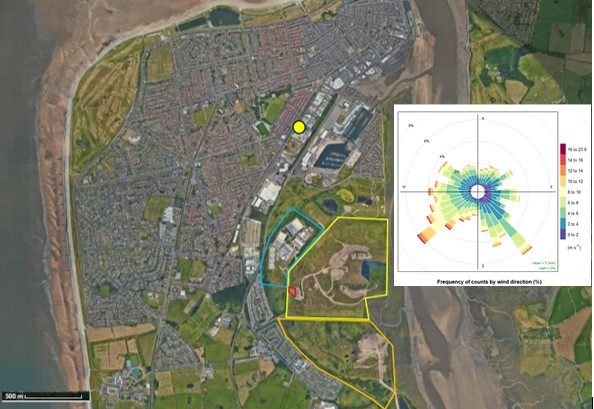
When the wind blows in certain directions, emissions may travel away from the monitoring unit and affect other parts of Fleetwood. This means the monitoring data reflects conditions at one location rather than across the whole area.
Why don’t you install more monitoring stations?
We understand that residents would like monitoring to take place in multiple locations.
The Mobile Monitoring Facility uses specialist equipment capable of continuously measuring gases such as hydrogen sulphide and methane to a high degree of accuracy.
Additional monitoring locations have been considered. The environmental permit now requires the operator to develop proposals for continuous hydrogen sulphide monitoring at a minimum of four locations around the site boundary. This monitoring will provide additional information to support our regulatory oversight of the site.
We continue to keep our monitoring arrangements under review.
How does the Mobile Monitoring Facility (MMF) work?
The Mobile Monitoring Facility is a specialist unit that:
Videos | Air Quality Monitoring | Engage Environment Agency
Where can I find monitoring data and reports?
You can access the latest Environment Agency monitoring information below:
These reports explain the monitoring we carry out to support our regulatory work and assess the performance of the site.
Why was there missing monitoring data in 2025?
A technical issue was identified with equipment used to check the hydrogen sulphide instrument.
Because the data from this period could not be reliably verified, it was removed to ensure accuracy and transparency.
If the operator installs monitoring equipment, how can you be sure the data is accurate?
Landfill operators are required to carry out monitoring in line with their environmental permit. Our role as regulator is to hold operators to account for meeting these requirements.
At Jameson Road, the recent permit variation includes a requirement for the operator to submit plans for and install continuous hydrogen sulphide monitoring at the site boundary.
We do not rely solely on operator data. We independently assess site performance through inspections, audits and technical assessments, as well as community reports.
Monitoring forms part of our wider regulatory activity, which also includes site visits, odour assessments and enforcement action where standards are not met.
Understanding the odour
What is causing the smell?
Odour from landfill sites generally comes from two sources:
Landfill gas contains small amounts of hydrogen sulphide, which has a strong “rotten egg” smell and can be detected at very low levels.
Why is odour sometimes worse at night?
Odour can be more noticeable at night due to weather conditions.
Lower wind speeds and temperature inversions can trap emissions closer to the ground and reduce dispersion, making odour more noticeable.
Videos | Air Quality Monitoring | Engage Environment Agency
Why is this problem still happening?
Landfill gas is produced continuously as waste breaks down and controlling it can be complex, particularly where older waste has been disturbed.
We have required improvements to gas management and site operations.
Permanent capping of Cells 5 and 6 is a key long-term step, designed to reduce emissions and stop odour affecting the community.
Temporary capping is an engineered cover designed to provide improved short-term control of landfill gas and odour. We have required this through enforcement action in areas where emissions have been identified.
Leachate and water management
Has there been a leachate leak at the site?
The operator has investigated a leachate management issue and concluded it was an isolated incident linked to redundant pipework.
We have reviewed the information and have not identified evidence that contradicts this conclusion at this stage.
We continue to regulate the site closely and will take further action if new evidence identifies wider issues.
Why did the operator investigate this rather than the Environment Agency?
Landfill operators are responsible for managing their sites and investigating operational issues such as leachate discharges.
Our role is to regulate and hold the operator to account through inspections, audits and technical assessments.
What checks has the Environment Agency carried out?
We do not rely solely on operator information. We carry out inspections, audits and technical assessments to verify site performance.
A targeted audit of leachate management systems is currently underway.
Action and reporting
Why has the Environment Agency changed the site permit?
We have varied the site’s environmental permit to reduce odour risk at Jameson Road.
The change means the operator can now only accept certain types of waste that are less likely to produce odour. This includes inert materials such as soil, concrete and bricks.
This reduces the amount of waste on site that can generate odour while further control measures are put in place.
The variation also requires the operator to develop plans for monitoring at the site boundary, which we must approve before it is installed.
Why did you issue a new enforcement notice in May 2026?
We issued a Regulation 36 Enforcement Notice after identifying significant emissions of landfill gas from the southern area of Cell 6 during site inspections and monitoring.
This area did not have appropriate engineered capping in place to contain emissions.
The notice requires the operator to submit a Construction Quality Assurance (CQA) plan and install engineered temporary capping to control emissions and reduce odour.
Why has permanent capping work paused?
Permanent capping is the most effective long-term measure to control landfill emissions.
The operator has paused part of this work while preparing a revised Construction Quality Assurance (CQA) plan, which must be approved before work can continue.
In the meantime, we have required temporary capping and other measures to reduce odour.
Are you planning to close the landfill site?
We understand that recent media coverage has raised questions about whether the site may be closed.
We are not currently in the process of closing the Jameson Road Landfill Site. Closure is one of several regulatory options available to the Environment Agency and can only be taken forward once all other enforcement options have been exhausted, in line with its enforcement and sanctions policy.
We are currently regulating the site to ensure the operator is taking action to significantly reduce odour. This includes permanent capping of landfill cells and enhanced gas management. We are closely monitoring their progress. If they fail to take the required action, we would then consider more significant regulatory action, which could include closure.
What is being done to reduce odour?
We have taken a range of actions, including:
Further information is available in the Enforcement and Latest Updates sections.
What will happen if the odour does not improve?
We recognise that odour is still affecting the community, and this is not acceptable.
If the operator does not demonstrate that odour can be effectively controlled, we will continue to escalate our regulatory response and consider all available options, including further restrictions, or as a last resort, closure.
Does reporting odour make a difference?
Yes.
Reports from residents help us: