Environment Agency supported projects
- Protect important habitats, including rare chalk streams
- Improve drought planning and water resource management
- Support groundwater and hydrological modelling
- Improve understanding of climate change impacts
- Inform river restoration and catchment management
- Build a national picture of temporary and non-perennial rivers
- Increase citizen science monitoring of intermittent streams
- Improve access to and use of intermittent stream data
- Integrate data from multiple monitoring sources
- Support more targeted and impactful monitoring
- Provide guidance and resources for volunteers
- Demonstrate how volunteer observations can inform real environmental decisions
- Build a stronger evidence base to help manage rivers and water resources in a changing climate
Rainfall Observers Network
The Daily Rainfall Observer’s Network is an integral and longsta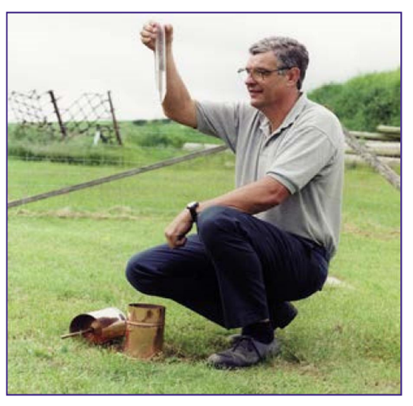 Observer reading the rain measure at eye level. Image copyright Met officending part of the Environment Agency’s (EA) overall rain gauge network that is delivered in conjunction with the Met Office (MO).
It is the most cost-effective element of the network, delivering an evidence base which the EA, the MO, water companies and others use to support a broad range of assessments, including managing and maintaining water resources.
The use of a voluntary network of observers allows rainfall data to be collected across many catchments, including remote areas. The data is collated by the EA before being ingested into the Met Office climate database where it undergoes quality control (QC) alongside data from automatic rain gauges (tipping bucket and weighing) and observations from other manual gauges. Once the QC process is complete all the data is stored by the Met Office as part of the long-term climate record for the UK. Rainfall data from EA automatic gauges are available via the Hydrology Data Explorer.
We are currently working together on a project to modernise the way the observers submit their daily rainfall data.
The Riverfly Partnership
The Environment Agency has a long-standing relationship with the Riverfly Partnership. Find out more about how the relationship works, and hear from Riverfly volunteers, in the video below.
Find out more about how you can get involved with the Riverfly Partnership here
Or read the latest Newsletter — The Riverfly Partnership
Plasticblitz

Plasticblitz highlights the scale of plastic pollution in UK rivers
A record number of 12 Environment Agency teams took part in this year’s Plasticblitz event. Now in its fifth year, the Plasticblitz engages community groups and Environment Agency teams to collect data on plastic pollution in and around rivers to raise awareness of the problem.
The simultaneous clean-up and data collection event took place between 31st May and 15th June 2025 and for the first time the initiative extended to Scotland. 504 citizen scientists took part clearing over 65km of river of litter. Over 17,000 items were categorised with 71% recorded as plastic waste. The
Environment Agency's Hertfordshire and North London Plasticblitzers won the award for Categorisation Champions and were joint winners for the most bags collected.
17,386 pieces of litter were categorised by citizen scientists. The most numerous items found were cigarette stubs followed by plastic/polystyrene pieces and food packaging items.
By this year (2025), global plastic waste is expected to reach 460 million tonnes annually, with 91% remaining unrecycled, travelling across rivers, seas and the wider environment. Over the years, plastics break down into microplastics contaminating food and water resources for people and wildlife.
We’re excited to announce that Plasticblitz will be back next year—an incredible opportunity to make a real difference in tackling plastic pollution. Whether through your workplace or your local community, we encourage everyone to get involved and be part of the solution.
Flow detectors
Flow Detectors Project – Citizen science monitoring of intermittent streams
Many of England's streams do not flow all year round. These ‘intermittent streams’ naturally switch between flowing, ponded and dry conditions. The Flow Detectors Project is a citizen science initiative that encourages people to record simple observations about whether streams are flowing or dry using the CrowdWater and DRYRivERS mobile phone apps. By combining volunteer observations with Environment Agency monitoring, we can build a better picture of how these valuable watercourses behave over time.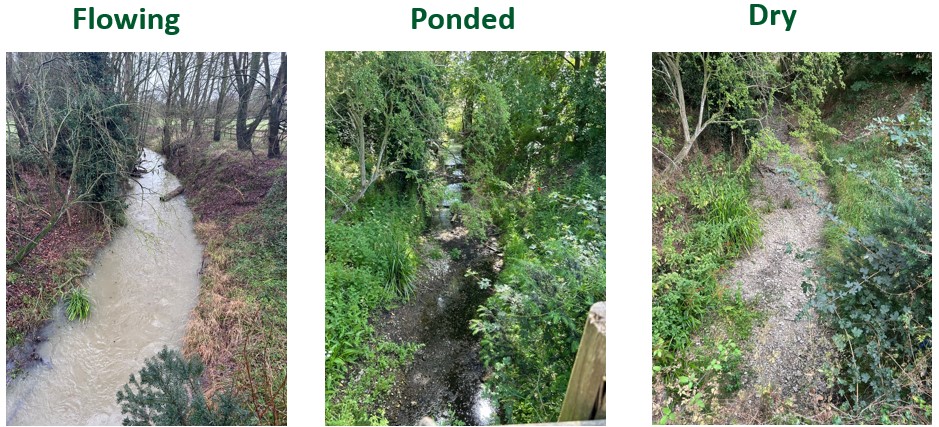
Why are intermittent streams important?
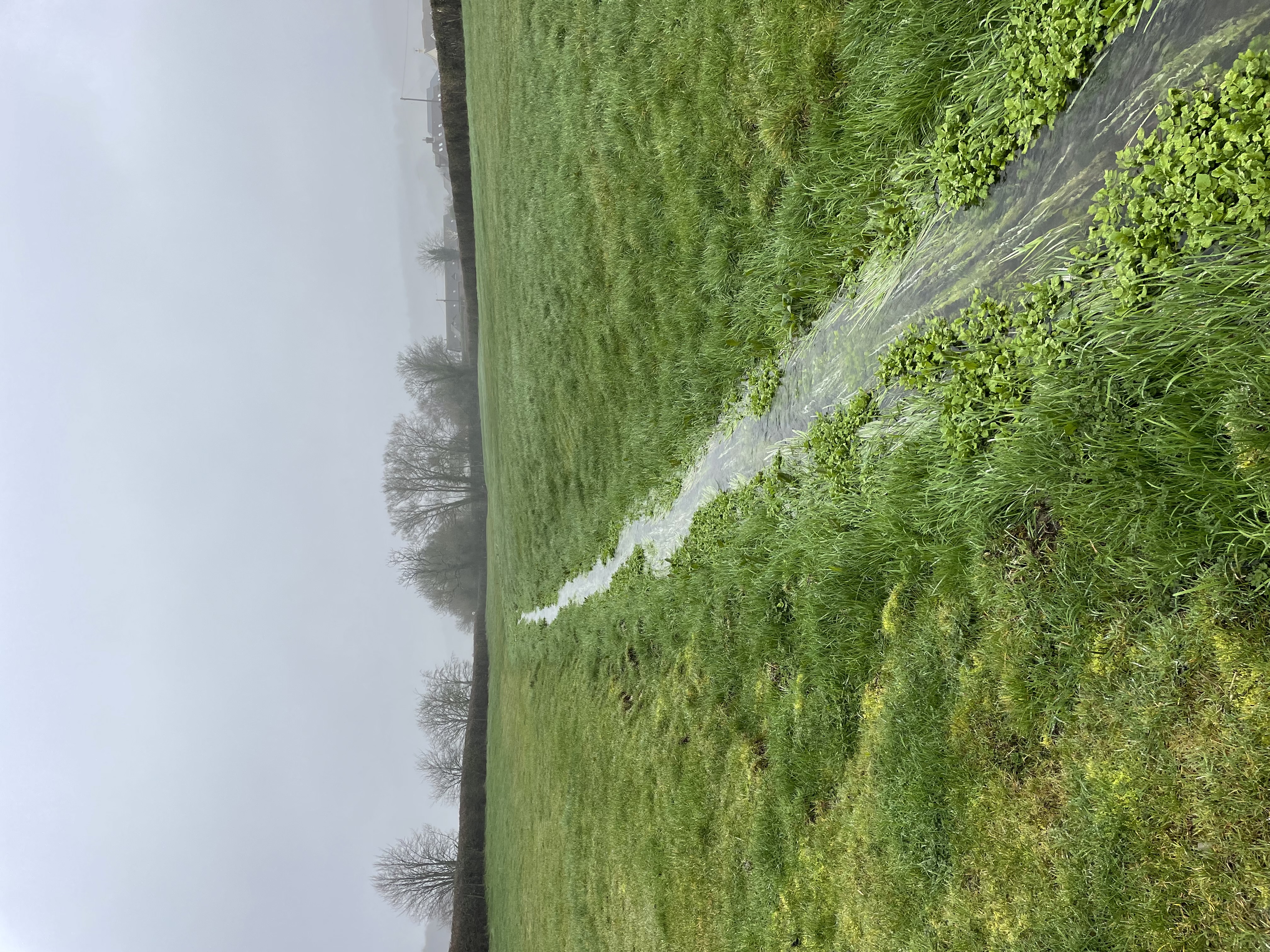 River Meon, chalk stream in Hampshire. Credit: Graham McNamee, EA
Understanding when and where streams flow helps us:
What are we aiming to achieve?
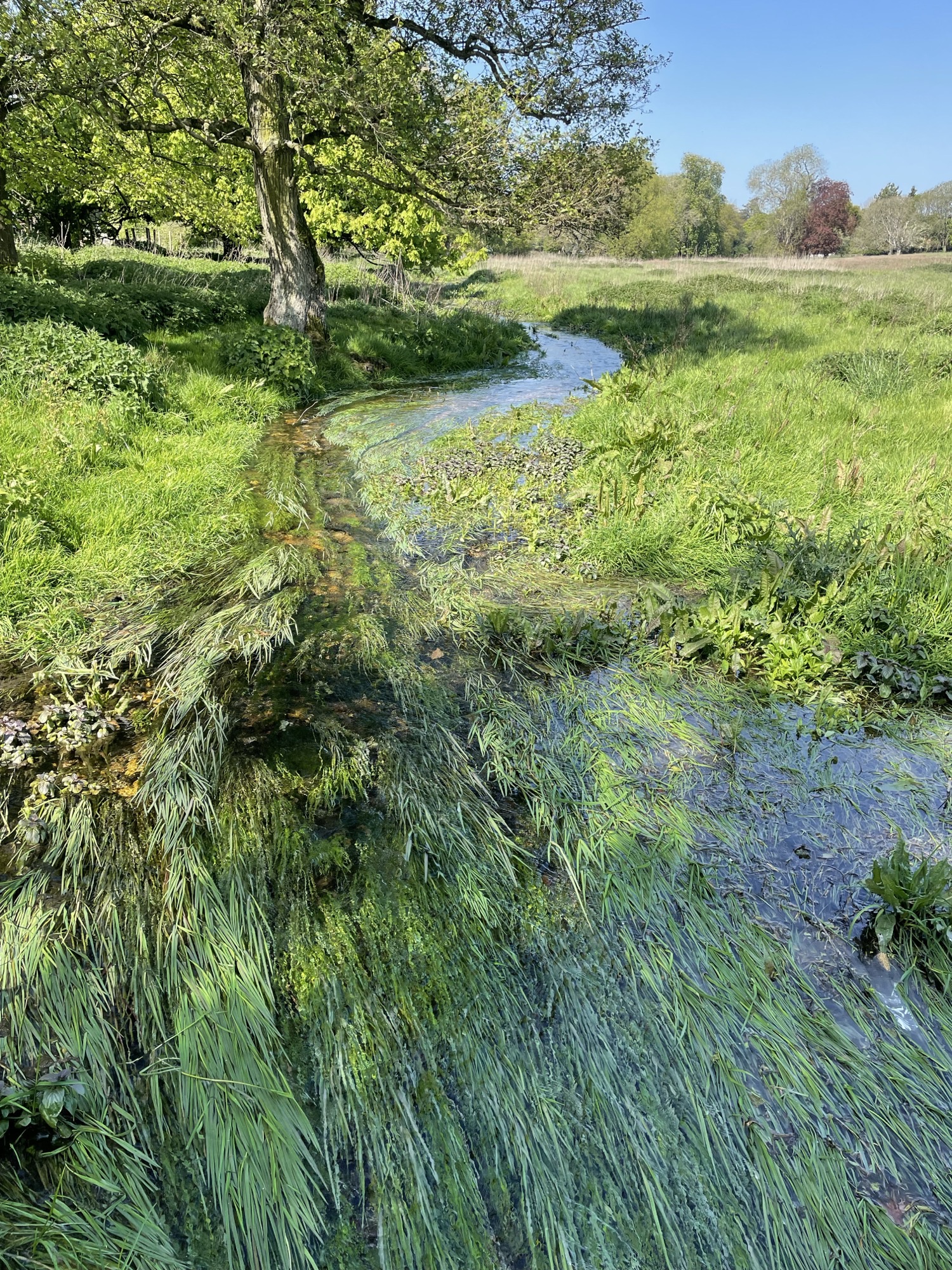 River Anton, chalk stream in Hampshire. Credit: Patrycja Meadows, EA
Our ambition is to create a larger, more connected network of people collecting information on intermittent streams across England.
Through the next phase of the Flow Detectors Project (until March 2027), we aim to:
How to get involved?
We’re keen to get more people involved in collecting intermittent stream observations. Considering the recent hot and dry weather, this is a critical time to be gathering this data.
If you’re interested in using these apps to collect intermittent flow, or you have ideas for where this might be incorporated into other monitoring, then please scan the QR code or register your interest here, so we can get in touch.
Please contact our Citizen Science mailbox if you would like to learn more about local existing opportunities that our Area Citizen Science Leads can signpost you towards.
Every observation matters
People contribute to intermittent stream monitoring in different ways, depending on the time they have available and their interests. There is no right or wrong level of participation. A single observation can be valuable, while regular monitoring over time can provide deeper insights into how streams behave.
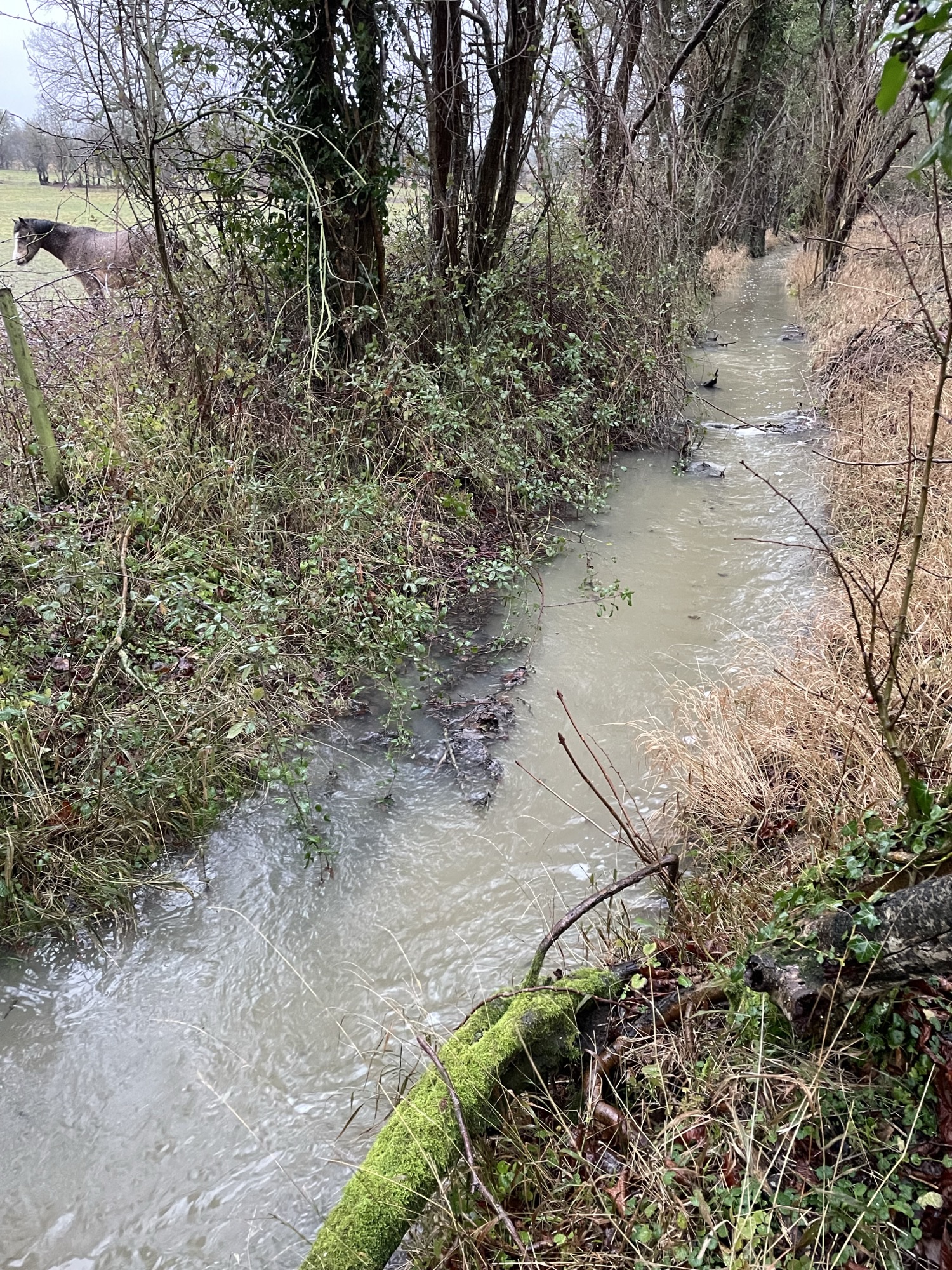 River Rib, Herts & North London. Credit: Graham McNamee, EA. Ad hoc observations - Some people contribute occasional observations when they happen to visit a stream. For example, someone out walking might notice a stream is dry, take a photograph and record what they see.
Targeted observations - Some participants choose to focus on particular streams or locations that interest them, but without committing to a fixed monitoring schedule. They may revisit the same sites from time to time and build-up a record of changing conditions.
Planned monitoring - Some volunteers take part in coordinated monitoring programmes organised by Rivers Trusts, catchment partnerships, community groups or other organisations. Monitoring locations, methods and survey timings are usually agreed in advance to answer specific questions about stream behaviour.
These categories should not be viewed as separate levels or grades of monitoring. They simply describe different ways of contributing. People may move between them over time as their interests, experience and availability change.
For example, a person might begin by submitting occasional observations while out walking, then start revisiting a favourite stream, and eventually join a coordinated local monitoring programme. All of these contributions help build our understanding of intermittent streams and are valuable for different purposes.
Useful links
This work forms part of EA's contribution to Defra’s Natural Capital and Ecosystem Assessment (NCEA) programme, and the EA's Supporting Citizen Science initiative.