Local flood history
What is the local flood history?
Enfield's flood risk
Flooding in Enfield comes from several sources, including rivers, surface water, groundwater and sewers. The highest risks are from main river (fluvial) and surface water flooding.
Enfield has over 100km of river, with four main rivers contributing to local flood risk: Salmons Brook, Pymmes Brook, Turkey Brook and the River Lee.
Surface water flooding, flash flooding, happens when heavy rain cannot drain away. Recent data shows that over 320,000 properties in London (link opens a new window) are at high surface water flood risk.
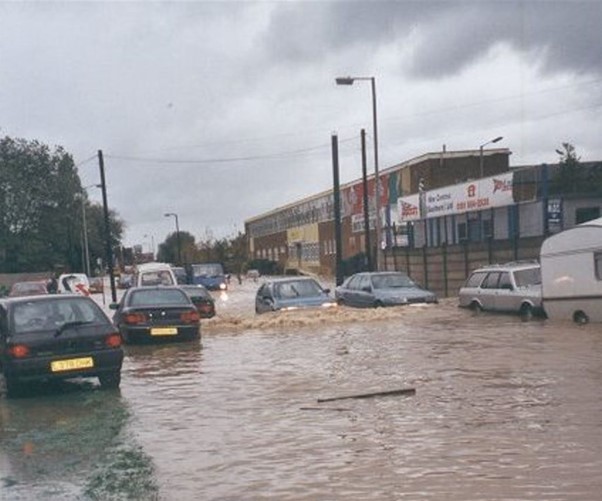
Enfield’s last major flood event was in 2001 on Montagu Road. 192 properties and key infrastructure were severely affected. With climate change increasing the frequency and severity of flooding, understanding these risks is essential for protecting our communities.
We encourage you to check your flood risk (link opens a new window) and know how to prepare.
What is going on to reduce local flood risk?
Enfield Council is delivering an ambitious programme of natural flood management (link opens a new window) and sustainable drainage systems (SuDS) (link opens a new window) to help reduce flood risk. These nature-based solutions go beyond traditional hard engineering and deliver wider environmental benefits.
Natural flood management includes woodland planting, river restoration, attenuation ponds and reintroducing beavers, all methods that slow and store water during heavy rainfall. SuDS, such as wetlands, rain gardens and tree pits, also help manage flood risk, improve water quality and boost local biodiversity. You can find more information on past and future projects on the timeline.
More information about the Council’s objectives and commitments can be found in Enfield Council’s Local Flood Risk Management Strategy (link opens a new window).
How flood risk is changing
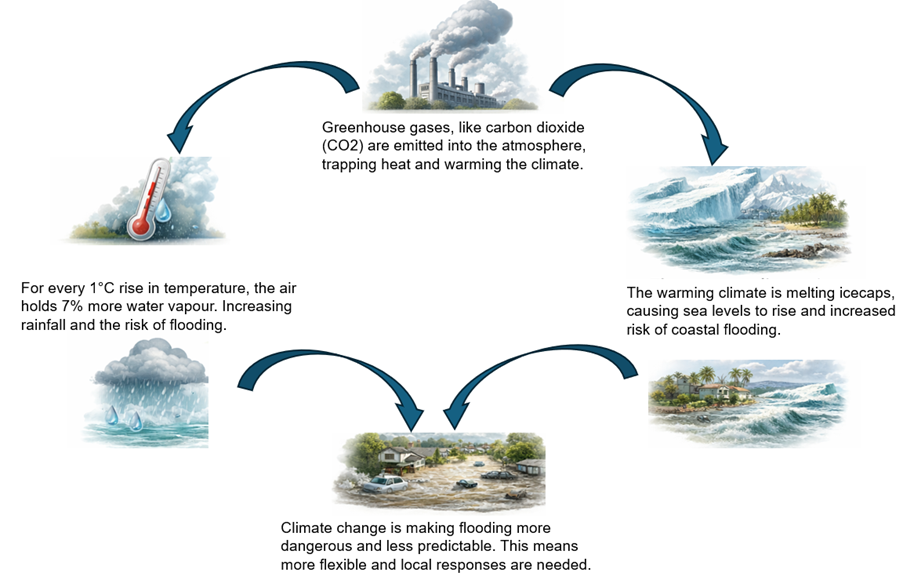
Climate change is causing more extreme and unpredictable weather patterns, increasing the risk of flooding. Local responses are, therefore, increasingly more important.
We are here to help local residents and businesses take more control of flood risk and reduce its impact. Meaning you get back to normal as quickly as possible.