Local flood history
- Prepare and maintain a Local Flood Risk Management Strategy (link opens a new window).
- Perform works to manage local flood risk, within the authority area, for example, through the use of flood alleviation schemes.
- Maintain an asset register, which records features in the borough with a significant effect on flooding.
- Maintain the flow of ordinary watercourses, which includes regulating developments and structures which could affect an ordinary watercourse.
- Provide advice as a statutory consultee on surface water drainage proposals of new development in the borough.
- Undertake flood investigations when a flooding event occurs which meets the flood investigation criteria.
What is the local flood history?
Hillingdon's flood risk
Flooding in Hillingdon can arise from several sources, including surface water, main rivers, ordinary watercourses, groundwater and sewers. The responsibilities of the different risk management authorities can be found here.
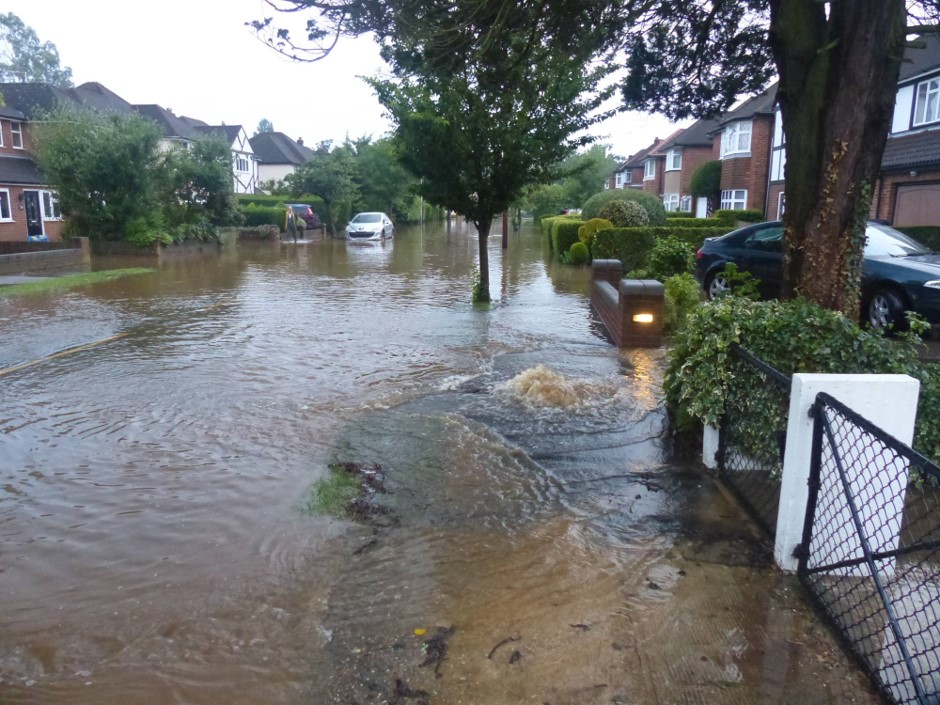
In September 2024, Hillingdon experienced significant flooding following a period of intense rainfall across London and the South East. Homes, schools, roads and community facilities were affected across the borough, particularly in parts of Ruislip and Ickenham.
A total of 172 flooding incidents were reported, including 123 properties that experienced internal flooding. The event was caused by a combination of heavy rainfall, high river levels and drainage systems becoming overwhelmed. It serves as a reminder that flooding can occur across Hillingdon and highlights the importance of understanding flood risk and being prepared for future flooding events.
Further information on previous flooding in the borough and details of flood investigations undertaken can be found here: Flood Incidents and Investigations (link opens a new window).
We encourage you to check your flood risk (link opens a new window) and know how to prepare.
What is going on to reduce local flood risk?
Hillingdon Council plays a key role in managing local flood risk and works with a number of partners, such as the Environment Agency and Thames Water, to contribute to the overall collaboration and efficient information sharing required for effective flood risk management.
Importantly the Council, as the Lead Local Flood Authority (LLFA), have the following responsibilities under the Flood and Water Management Act 2010:
The most recent flood investigation was carried out in response to the September 2024 flood event during which 172 properties in Hillingdon were reported to have flooded. Based on the evidence gathered, a series of recommended actions for flood risk mitigation were developed. You can find more information on the progress of these actions on the timeline.
How flood risk is changing
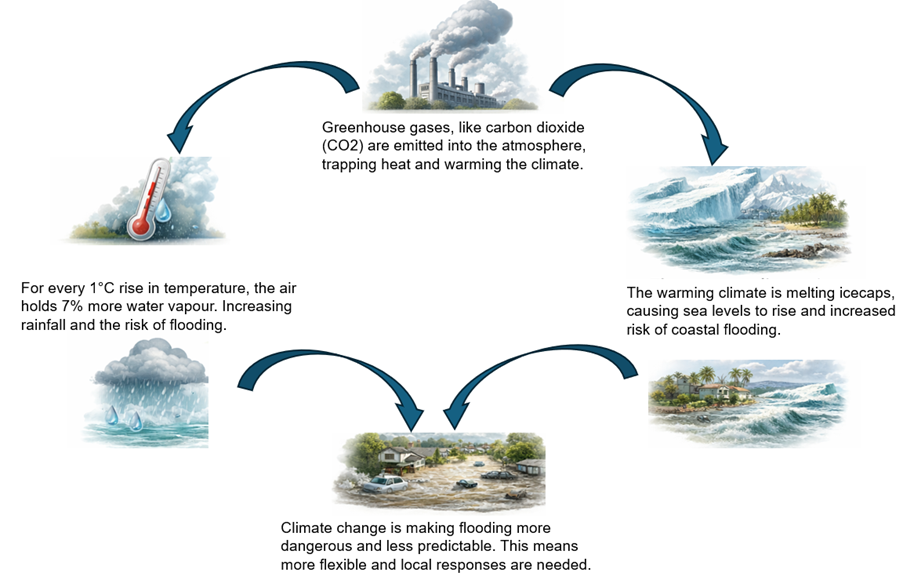
Climate change is causing more extreme and unpredictable weather patterns, increasing the risk of flooding. Local responses are, therefore, increasingly more important.
We are here to help local residents and businesses take more control of flood risk and reduce its impact. Meaning you get back to normal as quickly as possible.